Table of Content
Humphries cited him, alongside Kris Kristofferson, John Prine, and Randy Newman, as a number of U.S. singers who followed Dylan in breaking away from conventional styles of popular music and singing with their "distinctive" voices. In 2016, Waits embarked upon litigation against French artist Bartabas, who had used several of Waits's songs as a backdrop to a theatrical performance. Claims and counterclaims were made, with Bartabas claiming to have sought and been granted permission to use the material (and to have paid $400,000 for the privilege) but with Waits claiming that his identity had been stolen. The court ruled in Bartabas's favor, and the circus performance was allowed to continue, although the threat of further litigation meant that it was not performed outside France and the resulting DVD release does not contain Waits's material.
Among the celebrities who have described themselves as Waits fans are Johnny Depp, John Oliver, Jordan Peterson, Jerry Hall, Megan Mullally, and Nick Offerman. In Britain, prominent figures who have described themselves as Waits fans include the historian Simon Schama, the writer Raymond Briggs, the presenter Graham Norton, and the actor Colin Firth. Bob Dylan, who was a major influence on the young Waits, stated that Waits was one of his "secret heroes". In 1989, Waits began planning a collaboration with Robert Wilson, a theatre director he had known throughout the 1980s.
Early musical career: 1972–1976
While on the set of One from the Heart, Waits met Kathleen Brennan, a young Irish-American woman working as an assistant story editor; Waits later described encountering her as "love at first sight". In August 1980, they married at a 24-hour wedding chapel on Manchester Boulevard in Watts before honeymooning in Tralee, a town in County Kerry, Ireland, where Brennan had family. Returning to Los Angeles, the couple moved into a Union Avenue apartment. Hoskyns noted that with Brennan, "Waits had found the stabilizing, nurturing companion he'd always wanted", and that she brought him "a sense of emotional security he had never known" before. At the same time, many of his old friends felt cut off after his marriage. Tom also contributed a song to the Wim Wenders film, The End of Violence while, in 1998, Waits and Brennan composed the score and a song for Bunny, which won the Oscar for Best Short Film .

On his return to Los Angeles, he joined his friend Chuck E. Weiss by moving into the Tropicana motel in West Hollywood, a place that already had an established reputation in rock music circles. He was living in what biographer Hoskyns later called a "pastiche of poverty"; Waits told the Los Angeles Times that "You almost have to create situations in order to write about them, so I live in a constant state of self-imposed poverty". Waits worked at Napoleone's pizza restaurant in National City, California, and both there and at a local diner developed an interest in the lives of the patrons, writing down phrases and snippets of dialogue he overheard.
Personal life
According to David Smay, Swordfishtrombones was "the record where Tom Waits radically reinvented himself and reshaped the musical landscape." The album was critically well received; the New Musical Express named it album of the year. Waits was dissatisfied with Elektra-Asylum, whom he felt had lost interest in him as an artist in favor of their more commercially successful acts like the Eagles, Linda Ronstadt, Carly Simon, and Queen. Jones's musical career was taking off; after an appearance on Saturday Night Live, her single "Chuck E.'s In Love" reached number 4 in the singles chart, straining her relationship with Waits. Waits joined Jones for the first leg of her European tour, but then ended his relationship with her. In September, Waits moved to Crenshaw Boulevard to be closer to his father, before deciding to relocate to New York City. He initially lived in the Chelsea Hotel before renting an apartment on West 26th Street.
Jesse taught Spanish at a local school and was an alcoholic; Waits later related that his father was "a tough one, always an outsider". He described having a "very middle-class" upbringing and "a pretty normal childhood". This period of bold experimentation continued with Rain Dogs and Franks Wild Years which, with Swordfishtrombones, formed a landmark trilogy, one of the most accomplished musical achievements of the decade. During interviews, Waits has avoided questions about his personal life, gone off on tangents, and thrown in trivia.
Tom Waits: ACLU SoCal Auction
The resulting album, Closing Time, was released in March 1973, although it attracted little attention and did not sell well. Biographer Barney Hoskyns noted that Closing Time was "broadly in step with the singer-songwriter school of the early 1970s"; Waits had wanted to create a piano-led jazz album although Yester had pushed its sound in a more folk-oriented direction. An Eagles recording of its opening track, "Ol' 55", on their album On the Border, brought Waits further money and recognition, although he regarded their version as "a little antiseptic". Inspired by the work of Bob Dylan and the Beat Generation, he began singing on the San Diego folk music circuit as a young man.

Jarmusch noted that "Tom and I have a kindred aesthetic. An interest in unambitious people, marginal people." The pair developed a friendship; Waits called Jarmusch "Dr Sullen", while Jarmusch called Waits "The Prince of Melancholy". Newly married and with his Elektra-Asylum contract completed, Waits decided that it was time to artistically reinvent himself. He wanted to move away from using Howe as his producer, although the two parted on good terms. With Brennan's help, he began the process of firing Cohen as his manager, with he and Brennan taking on managerial responsibilities themselves. He later noted that "once you've heard Beefheart it's hard to wash him out of your clothes. It stains, like coffee or blood." He also came under the influence of Harry Partch, a composer who created his own instruments out of everyday materials.
In 2004, Waits related that "Wilson is my teacher. There's nobody that's affected me that much as an artist". Waits was scheduled to write the music for the play, and at the suggestion of Allen Ginsberg, Waits and Wilson approached the Beat poet William S. Burroughs to write the play. To do this, they flew to Kansas to meet with Burroughs, who agreed to join their project. Waits travelled to Hamburg in May 1989 to work on the project, and was later joined there by Burroughs.

He decided to reduce his workload so as to spend more time with his children; this isolation spawned rumours that he was seriously ill or had separated from his wife. For three years, he turned down all offers to perform gigs or appear in movies. However, he made several cameos and guest appearances on albums by musicians he admired. The English musician Gavin Bryars visited him in California and Waits added vocals for a re-release of Bryars's Jesus' Blood Never Failed Me Yet, which was then nominated for the 1993 Mercury Music Award. In Fall 1986, he took a small part in Candy Mountain, a film by Robert Frank and Rudy Wurlitzer, as millionaire golf enthusiast Al Silk. He then starred in Hector Babenco's Ironweed, as Rudy the Kraut, a more substantial role.
He said he worked in the forestry service as a fireman for three years and served with the Coast Guard. He enrolled at Chula Vista's Southwestern Community College to study photography, for a time considering a career in the field. He began frequenting folk music venues around San Diego, becoming drawn into the city's folk music scene. Named as one of VH-1s Most Influential Artists of All Time, it is no surprise that Waits body of work has long been covered by other musicians. A legendary live performer, his appearances are rare, extraordinarily memorable and highly anticipated events. Part distorted vaudeville, part big top, part piano bar and part stand-up, live shows are meticulously orchestrated to have all the grace and excitement of a derailing train, as those lucky enough to have seen his post-Mule tours can testify.

He decided to then record the songs he had written for both Alice and Woyzeck, placing them on separate albums. For these recordings, he brought in a range of jazz and avant-garde musicians from San Francisco. The two albums, titled Alice and Blood Money, were released simultaneously in May 2002.
He changed the setlist for each performance; most of the songs chosen were from his two Island albums. In July 1978, Waits began the recording sessions for his album Blue Valentine. Part way through the sessions, he replaced his musicians in order to create a less jazz-oriented sound; for the album, he switched from a piano to an electric guitar as his main instrument. For the album's back cover, Waits used a picture of himself and Jones leaning against his car, a 1964 Ford Thunderbird, taken by Elliot Gilbert. From the album, Waits's first single was released, a performance of "Somewhere", from the musical "West Side Story", but it failed to chart.
In July 1976, he recorded the album Small Change, again produced by Howe. In later years, he described it as a seminal episode in his development as a songwriter, describing it as the point when he became "completely confident in the craft". On release, the album was critically well received and was his first release to break into the Billboard Top 100 Album List, peaking at number 89. Later, biographer Patrick Humphries called Small Change Waits's "masterpiece". He received growing press attention, being profiled in Newsweek, Time, Vogue, and The New Yorker; he had begun to accrue a cult following. He went on tour to promote the new album, backed by the Nocturnal Emissions .
Music Department
At the June concert in El Paso, Texas, he was awarded the key to the city. Waits had also continued interacting and working with other artists he admired. He was a great fan of The Pogues and went on a Chicago pub crawl with them in 1986. The following year, he appeared as a master of ceremonies on several dates of Elvis Costello's "Wheel of Fortune" tour.
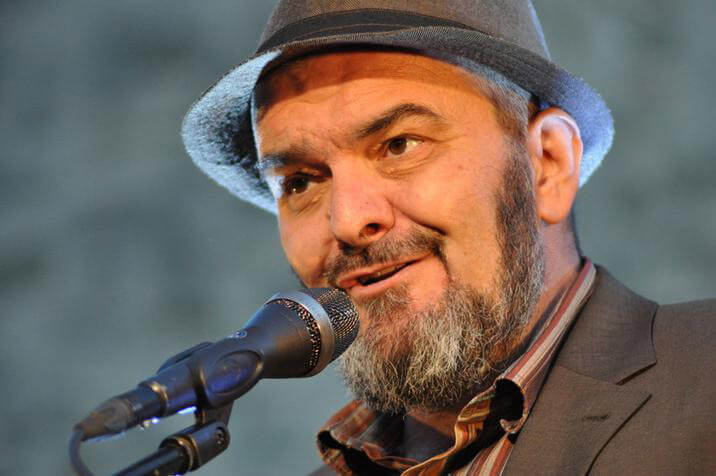
Waits and Brennan, for instance, wrote two songs for the Dead Man Walking soundtrack album at the request of director Tim Robbins. During his career, Waits has had little chart success and no major commercial success. Hoskyns referred to him as being "as important an American artist as anyone the twentieth century has produced", while Humphries described him as "one of America's finest post-Dylan singer-songwriters". Humphries noted that at the time of his emergence to public fame, Waits represented "a unique voice on the late Seventies pop radar". He thought that Waits was, along with the painter Edward Hopper, "one of the two great depicters of American isolation". During the summers, he visited maternal relatives in Gridley and Marysville.


No comments:
Post a Comment